Indigenous People’s Network Named a Fall 2025 Grow Grantee

During the Fall 2025 Grow round, Grassroots Fund awarded $328,800 to 97 grantee groups, and Indigenous People’s Network was one of the grant winners. The award process happens in partnership with community reviewers, including grant readers and the Grantmaking Committee, and is rooted in a group’s alignment with the Guiding Practices. Below is a list of the groups that received funding in each state.

Food Forests Play Critical Role in Building Community and Advancing the Right to Food

By Amanda Hutson

It’s the spring of 2023 and the Edgewater Food Forest in Mattapan, Mass. has been three years in the making. Today, it will open, giving the community a first-hand look at what the right to food can look like in practice.

This is the city of Boston’s 10th food forest–a term used to describe a sustainable, edible landscape designed to mimic the structure and function of a natural forest ecosystem–and Mayor Wu is present at the ribbon-cutting ceremony.

“I’ve lived on this street for 30 years, and I never knew my neighbors until we started this project together,” a neighbor shares with Hope Kelley, Senior Communications Manager at the Boston Food Forest Coalition, who assisted with this project from start to finish.

Throughout the process, she heard a similar sentiment from many nearby community members. To Hope, “everything else falls into place once you’ve met each other.” Now, in 2025, the Edgewater Food Forest provides not only fresh, healthy food for the community, but a place for fitness, education, and togetherness.

What Is the Right to Food?

The United Nations defines the right to food as the right to have regular, permanent and unrestricted access to adequate, sufficient, culturally relevant food, which ensures a physical and mental, individual and collective, fulfilling and dignified life free of fear. How might this be realized in a place like the United States, which has a complex relationship with international human rights law?

The National Right to Food Community of Practice (RTF CoP)–a membership-based national coalition of advocates and organizations–is working to build a shared narrative around understanding food as a human right. They work to tackle the root causes of hunger with long-term solutions, standing firm in their stance that realizing the right to food can only happen by moving beyond short-term emergency solutions. Chelsea Marshall, Director of Special Projects at the National RTF CoP, says that central to her work is reinstating the idea that all are rightsholders as opposed to stakeholders.

“Rights-based approaches for me are really about shifting the way in which we see ourselves in relationship to the problems that we’re facing,” she says.

As part of the RTF CoP, she supports various working groups to identify the ways policies and practices are supporting or constraining the realization of the right to food. For instance, governments can enact progressive policies that advance equitable access to nourishing food. Or conversely, they can adopt measures that restrict such access or enable corporations to take actions that undermine the right to food. Chelsea urges people, as rightsholders, to get involved in spaces where local and state governments are making decisions that affect the conditions needed for everyone to enjoy the right to food.

Agroforestry and Agroecology

Reflections from the 2025 World Congress on Agroforestry in Kigali, Rwanda

By Michelle Nikfarjam

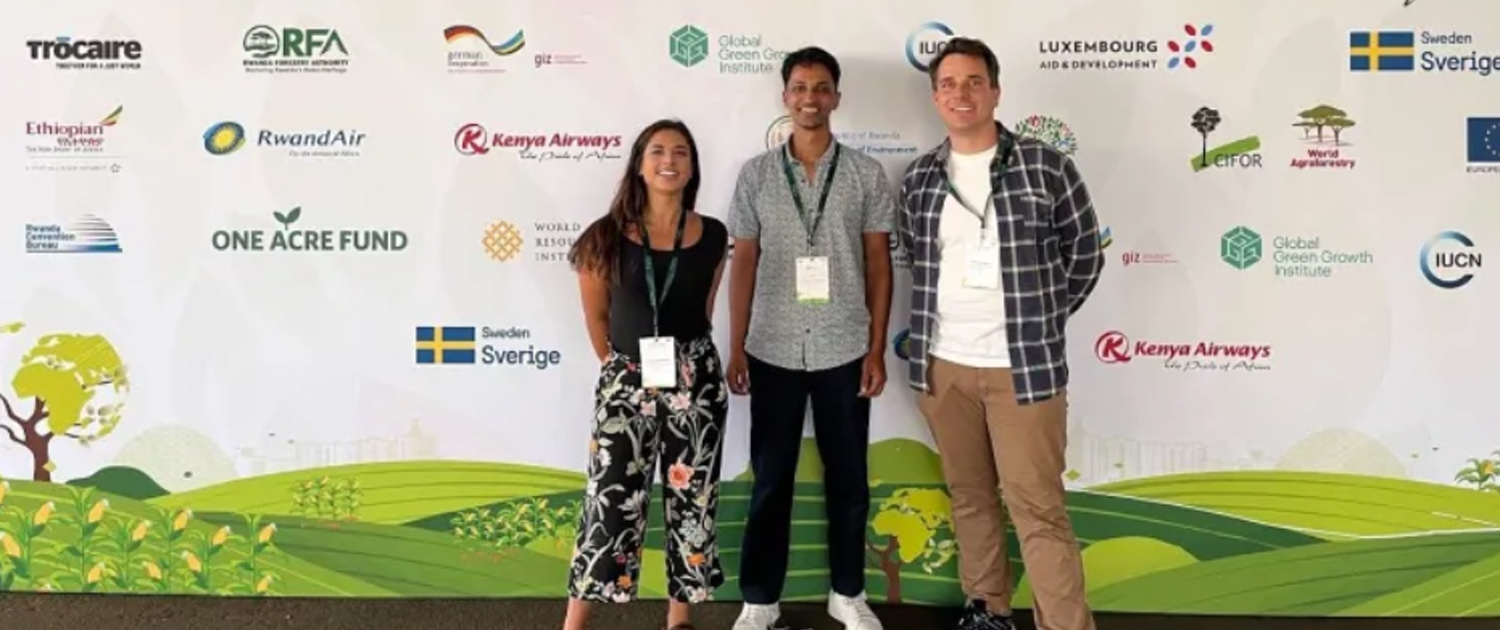
As the temperature in Burlington, Vt. plummets to near zero (don’t even ask me about the “feels like” temperature, spoiler alert: it feels COLD), I’ve been reflecting on warmer days. In mid-October, I traveled to Kigali, Rwanda as a delegate to the 6th World Congress on Agroforestry, representing the Institute for Agroecology (IfA) and Food Systems at UVM. I was there to share my PhD research on community food forests and learn from the 700-plus delegates from 63 countries, working across research, practice, policy, and civil society.

As I shared my research, listened to other presentations, and went on site visits, I was buoyed by the extensive work taking place in agroforestry across the globe. But, at the same time, I was grappling with the gaps – especially around participatory and community co-designed processes. There is a lot of good work happening, and we still have much to do.

About the World Congress on Agroforestry

The World Congress on Agroforestry (WCA) started in 2004 in Orlando, Fl., with the aspiration of creating a global forum for science, policy, and practice to move forward global agroforestry transitions. The WCA is now the place where the field of agroforestry periodically “re-anchors” itself, addresses new debates, tensions, and questions, and reflects on what has and hasn’t worked in practice. Convened by the International Union for Agroforestry (IUAF) with rotating host country’s Ministries of Environment, the WCA has strong participation from Center for International Forestry Research and World Agroforestry (CIFOR-ICRAF), the United Nations Food and Agriculture Organization (UN FAO), and other international partners.

This year’s WCA in Kigali was the sixth (following Nairobi, Delhi, Montpellier, and Québec City). Under the theme of “agroforestry for people, planet and profit,” Kigali built on the 5th Congress in Québec (2022), which called on agroforestry to support the “transition to a viable world.” The 6th Congress advanced this vision by examining the interconnected ecological, social, and economic challenges of scaling agroforestry.

Healey-Driscoll Administration Announces $22 Million in Grants to Improve Food Security and Resiliency Across Massachusetts

Boston — The Healey-Driscoll Administration announced over $22 million in grants today to support 113 local food producers and food system organizations, in addressing food insecurity in Massachusetts. These funds will help strengthen Massachusetts’ food production and distribution sectors, which will allow residents more access to fresh, locally grown and produced food. The grants are made possible through the Food Security Infrastructure Grant (FSIG) program, an innovative and competitive grant program administered by the Massachusetts Department of Agricultural Resources (MDAR). The program is designed to support food security initiatives that provide more equitable access to locally grown, raised, harvested and caught foods by strengthening the local food supply chain.

“Thanks to this transformative program, we’re continuing our work to ensure that food producers and distributors in Massachusetts are equipped to feed our residents with fresh local products,” said Governor Maura Healey. “While the Trump Administration is cutting food assistance for millions of people, Massachusetts is stepping up to make sure our communities have affordable, healthy food while also supporting our farmers and local businesses.”

“A strong local food system with thriving growers and supply-chain enterprises is crucial to a healthy economy,” said Lieutenant Governor Kim Driscoll. “That’s why we’re invested in making ours in Massachusetts as successful as possible so all residents can have ready access to local food, and our producers and distributors have the tools and resources they need to grow more food and distribute that food across the state.”

Launched in 2020 as a recommendation of the Massachusetts Food Security Task Force, the FSIG program provides grants for capital infrastructure projects that increase access to locally produced food for families and individuals throughout the state who may be facing food insecurity, live in gateway cities or food deserts, or otherwise face unequal access to food. According to the most recent food access report by the Greater Boston Food Bank, 1 in 3 residents faced food insecurity in 2024. The program aims to foster increased collaboration between farmers, fishers, and other local food producers with the goal of maintaining a strong, resilient food system to help mitigate future supply chain issues.

“Since the inception of the FSIG program, grants have been awarded and projects funded that have allowed farms in Massachusetts to increase their production and viability during uncertain times,” said EEA Secretary Rebecca Tepper. “As growers continue to face challenges like unpredictable and extreme weather, unsettled labor issues, and rising costs of production, the FSIG program has helped farmers and fishers build resilience for the future while helping to feed more people in Massachusetts.”

“Farmers and food system entities have utilized their awards to fund projects that have renovated aging infrastructure to better position themselves to modernize and increase their growing and distribution capacity,” said MDAR Commissioner Ashley Randle. “When our growers are able to produce more food and find innovative ways to distribute that food, we all benefit by having more local options which makes us rely less on outside food sources.”

“Giving growers and producers the resources they need is pivotal to protecting and expanding our local food supply chain,” said Senator and Co-Chair of the Joint Committee on Agriculture and Fisheries Dylan Fernandes (D – Plymouth and Barnstable). “These investments will ensure that Massachusetts residents have the best access to locally grown and produced food to help keep families fed this winter.”

“Far too many people understand the ongoing struggle to keep healthy food on the table, and this program has been one way that we can leverage our incredible local seafood industry and community nonprofits to maintain a consistent supply of fresh, nutritious food,” said Senator Mark Montigny (D – Second Bristol and Plymouth), who is a strong supporter of the FSIG program and legislative efforts backing local fishermen and farmers. “The pandemic exposed great weaknesses in our national food supply that have not been resolved years after that emergency ended. Therefore, it is vital that we continue to invest in our local infrastructure and community partners through programs such as FSIG.”

“Our FSIG program is a model for other states in showing how to help local food systems thrive,” said Representative and Co-Chair of the Joint Committee on Agriculture and Fisheries Natalie Blais (D – Sunderland). “Here in Massachusetts, we believe in our farmers and believe that investing in our neighbors not only makes economic sense but also ensures access to fresh, local, healthy food.”

“From our farms to our fishing boats, local food producers are the foundation of Massachusetts’ economy, food security, and community resilience,” said Representative Ann-Margaret Ferrante (D-Gloucester). “During the pandemic, we saw firsthand how fragile national and global food supply lines can be. Investing in programs like the Food Security Infrastructure Grant helps ensure that when disruptions occur, we have strong, local systems in place to feed our residents. By strengthening our ability to grow, harvest, and distribute food here at home, we are supporting our economy, our communities, and the health of every Massachusetts family.”

Small Farm Makes a Big Impact in Rhode Island

On a summer morning in northern Rhode Island, birds burst into song and a breeze carries the scent of fresh soil. Ten minutes from the bustle of Cumberland’s schools, a small hillside farm is quietly reshaping the way students connect to their food.

Tucked into the northeast corner of the state, Open fArms Retreat is a two-acre farm cascading down a steep hill between healthy forests. Greenhouses bookend the property, and bees drift lazily around hives beside a bed of perennials. At the base of the hill, a large tent hosts gatherings, retreats, and youth programs. The quiet and stillness are intentional as founder Andraly Horn is also a meditation teacher.

“I wanted to create a space where those who visit the farm find a little more peace in their hearts and leave feeling lighter and happier than when they arrived,” says Andraly.

A lifelong farmer from Texas, Andraly moved to Rhode Island with his family in 2007. Trees came down, soil was worked, and crops began to grow. Initially, the farm fed only the family, but as harvests outpaced their needs, the next step was clear: share the bounty. Starting this fall, the 4,500 students in the Cumberland School District will find ingredients from Open fArms Retreat in their school lunches—fresh, sustainably grown, and just four miles away. The partnership is the result of a two-year program funded by the New England Food Vision Prize and managed by the Pocasset Pokanoket Land Trust (PPLT).

PPLT, a tribally led nonprofit founded by Chief George Spring Buffalo, Chairman of the Pocasset Tribe of the Pokanoket Nation, strives to build a more resilient and equitable food system by supporting underserved farmers throughout the region. Services range from grant writing assistance and soil health testing to financial literacy and marketing training. In 2023, PPLT added farm-to-institution facilitation, making this school partnership a natural fit.

Alongside PPLT and Open fArms Retreat, the Cumberland Farm-to-School project brought together Roch’s Fresh Foods, Farm Fresh Rhode Island, Chartwells, and the Massachusetts chapter of the Northeast Organic Farmers Association (NOFA/MA). Cumberland Schools’ Multilingual Learner (MLL) Coordinator, Jillian Belanger, Ph.D., served as the bridge between the district and the project team.

Through this collaboration, the farm became a direct supplier—and a classroom without walls. Middle and high school MLL students planted seeds in pots, visited the farm during June’s strawberry harvest, and later transplanted their seedlings into the beds. “Open fArms Retreat offered an ideal opportunity at the end of the school year to get students and teachers outside into an idyllic environment that we don’t often have a chance to experience together,” says MLL high school teacher Paula Pellegrino. “We were guided on a tour of the farm, and shown all the amazing ways it produces sustenance for people and animals. We were encouraged to share in the cycle of planting and growing with seeds, tools and soil.”

Momentum is already building from this work. Plans are underway for building raised garden beds at the middle schools and integrating a hydroponic freight farm into the high school environmental science curriculum. Andraly and his team will lead both initiatives.

PPLT currently supports more than fifty small, underserved farmers, none of whom are yet linked to local schools. “Most of the farmers we support are struggling to make ends meet,” says Chief Spring Buffalo. “Building institutional relationships takes time and capacity. PPLT can help farmers make that connection.”

With the Cumberland pilot as proof of concept, PPLT aims to replicate and scale the model across New England—so that, like Open fArms Retreat, many small farms will have a big impact in their community.

PPLT Receives SARE Grant for Indigenous Food Sovereignty Initiative

The Pocasset Pokanoket Land Trust (PPLT) is proud to announce that it has been awarded a grant from SARE Northeast in support of its Indigenous Food Sovereignty Program in Massachusetts, Rhode Island and Connecticut.

The Sustainable Agriculture Research and Education (SARE) program is a producer-driven, decentralized competitive grants and education program operating in every state. Funded by the United States Department of Agriculture’s National Institute for Food and Agriculture, the program is run by four regions (North Central, Northeast, South and West) hosted by land grant institutions.

Since 1988, SARE has funded thousands of projects to advance agricultural innovation that promotes profitability, stewardship of the land, air and water, and quality of life for farmers, ranchers and their communities. Primary grant programs include research and education, professional development and producer grants. Depending on the region, applicants also can propose projects under special grant programs for graduate students, community development practitioners and ag educators conducting on-farm research.

This funding will support the addition of backyard and community gardens by Narragansett Clan Chief Musquant Nompashim Netas (Rocky Johnson). The award will directly benefit families currently participating in the program while also adding new participants from the Pocasset and Pequot tribes. The ultimate goal of the work is to connect the regional tribal communities with their traditions, the land, and each other.

Rocky understands that this work goes beyond food security. “Food brings people together and strengthens communities. It’s a different kind of medicine.”

PPLT Awarded GAIA Grant to Expand Indigenous-Led Composting and Food Sovereignty Program

The Pocasset Pokanoket Land Trust (PPLT) is proud to announce that it has been awarded a $25,000 grant from the Global Alliance for Incinerator Alternatives (GAIA) to expand its Indigenous food sovereignty program through community-led composting initiatives.

GAIA is an international network of grassroots organizations, non-profits, and advocates working toward a zero-waste future. With 800 members across more than 90 countries, GAIA advances environmental justice by promoting community-driven solutions to waste, pollution, and resource conservation.

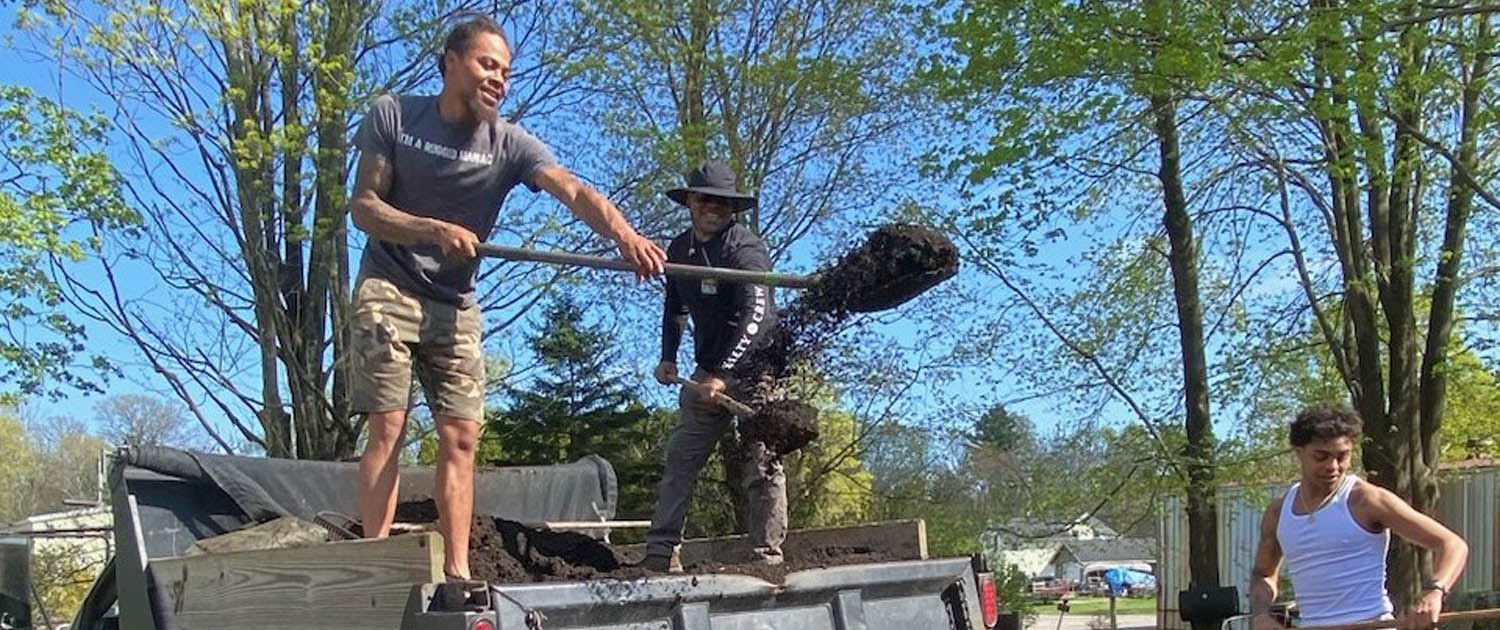
This funding will support the expansion of backyard composting efforts led by Narragansett Clan Chief Musquant Nompashim Netas (Rocky Johnson). The initiative will directly benefit families currently participating in PPLT’s food sovereignty program while addressing the increasing demand from those on the waiting list. By creating accessible, zero-cost composting solutions, this program will help divert organic waste from landfills, reduce methane emissions, and enrich soil health to support sustainable food production.

“In Rhode Island, as in many states across the U.S., composting services are largely privatized and cost-prohibitive for low-income families,” said Michelle Nikfarjam, Program Manager at PPLT. “Through this grant, we can remove financial barriers, provide essential infrastructure, and empower Indigenous families to engage in waste reduction and sustainable agriculture on their own terms.”

By demonstrating the scalability and impact of localized composting solutions, this initiative serves as a model for how zero-waste strategies can advance environmental justice, climate resilience, and Indigenous food sovereignty.

To support Indigenous Roots Forever or other PPLT programs, go to our Donations page.

USDA Funding Supports Northeast Native Americans

The Pocasset Pokanoket Land Trust (PPLT) is a Tribally led nonprofit organization committed to reconnecting and empowering various Indigenous peoples throughout the Northeast. The Land Trust acts as a catalyst for change, addressing critical issues related to land reclamation and food insecurity for the Pocasset Wampanoag tribe and other marginalized communities. Through its targeted initiatives, PPLT empowers communities across New England to reclaim agricultural practices and enhance local food sovereignty. These efforts not only improve access to fresh, healthy food but also foster a sense of community and cultural pride among Indigenous peoples in the Northeast.

A key element of PPLT’s efforts is funding from the 2501 Program, a U.S Department of Agriculture (USDA) program designed to support outreach and assistance for underserved farmers and ranchers. This funding has been crucial in helping the land trust cultivate valuable partnerships. Collaborations with organizations such as Global Village and the Northeast Organic Farming Association have expanded PPLT’s reach, enabling the implementation of mentorship programs and the creation of meaningful community connections. Additionally, PPLT has engaged in extensive grant partnerships with the USDA, including multiple grants from the National Resource Conservation Service (NRCS) and the Beginning Farmer and Rancher Development Program (BFRDP) through the National Institute of Food and Agriculture (NIFA).

“Leveraging the 2501 Program funding, BFRDP, and NRCS grants has created a functional series of programs that we would never have had otherwise,” said Nathan Erwin, Director of Agriculture and Land Stewardship at PPLT. His work focuses on harnessing relational power to facilitate access to land, promote farm equity, and expand agroecological knowledge.

The organization is focused on improving Indigenous food sovereignty through several initiatives, including community gardens, mentorship programs for local farmers and marketing strategies for Indigenous produce.

“It is essential to have grants, partnerships, and networks because we can’t do this alone,” said Erwin. “Nonprofits need to collaborate to strengthen and build a more robust and sustainable food system for the future.”

Ocean Hour Farm Awards Grant to PPLT for Indigenous Food Sovereignty Program

Ocean Hour Farm in Newport, RI has chosen Indigenous Roots Forever Food Sovereignty Program as an awardee in support of its traditional gardening practices and transition mentoring goals in Rhode Island and Connecticut. The grant will ensure regenerative farming skill development among tribal participants by training them to grow their own produce for five months of the year and build more economic self-sufficiency among families.

Ocean Hour Farm is a center for education, scientific research and regenerative farming practices, with emphasis on the connection between land and ocean; the grant program funds efforts to fill knowledge and infrastructure gaps to accelerate and support an inclusive transition to regenerative and traditional land management in our local food-and-fiber shed.

Narragansett Clan Chief Musquant Nompashim Netas (Rocky Johnson) will continue to provide leadership on the project, mentoring his son and tribal member, Bow Johnson. Bow will now be able to assist and carry on the legacy of their tribal roots, with a spirit of cooperation and community.

PPLT to partner with the Institute for Local Self-Reliance on Composting Program

The Pocasset Pokanoket Land Trust (PPLT) received a grant from the Institute of Self-Reliance (ILSR) to increase community composting efforts within PPLT’s Indigenous Food Sovereignty Program. PPLT was one of 10 awardees selected from a competitive pool of applicants across New England.

The Institute for Local Self-Reliance, founded in 1974, is a national research, advocacy, and technical assistance organization that empowers communities to take charge of their local resources, economies, and environmental future. Through its Composting for Community Initiative, ILSR promotes distributed and diverse local composting across the country, aiming to cut food loss, enhance soils and watersheds, support local food production, and protect the climate while addressing community prosperity and equity.

“We are grateful for this new partnership with the Institute for Local Self-Resiliency as composting is very important to our program,” says Musquant Nompashim Netas, Chief of the Ninigret Nehantick Nahaganset Clan and Leader of the Indigenous Food Sovereignty Program. “Composting is recycling. When we feed the Earth, the Earth will feed us.”