
Food Forests Play Critical Role in Building Community and Advancing the Right to Food
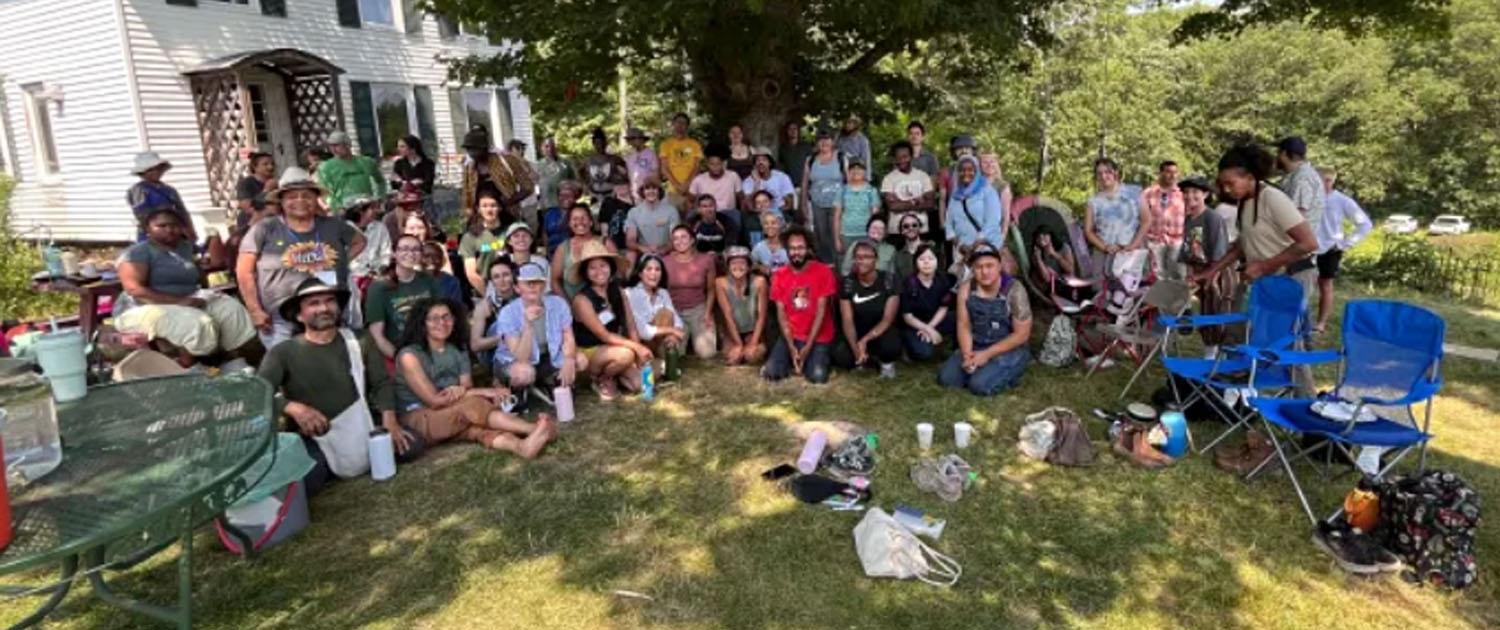
By Amanda Hutson
It’s the spring of 2023 and the Edgewater Food Forest in Mattapan, Mass. has been three years in the making. Today, it will open, giving the community a first-hand look at what the right to food can look like in practice.
This is the city of Boston’s 10th food forest–a term used to describe a sustainable, edible landscape designed to mimic the structure and function of a natural forest ecosystem–and Mayor Wu is present at the ribbon-cutting ceremony.
“I’ve lived on this street for 30 years, and I never knew my neighbors until we started this project together,” a neighbor shares with Hope Kelley, Senior Communications Manager at the Boston Food Forest Coalition, who assisted with this project from start to finish.
Throughout the process, she heard a similar sentiment from many nearby community members. To Hope, “everything else falls into place once you’ve met each other.” Now, in 2025, the Edgewater Food Forest provides not only fresh, healthy food for the community, but a place for fitness, education, and togetherness.
What Is the Right to Food?
The United Nations defines the right to food as the right to have regular, permanent and unrestricted access to adequate, sufficient, culturally relevant food, which ensures a physical and mental, individual and collective, fulfilling and dignified life free of fear. How might this be realized in a place like the United States, which has a complex relationship with international human rights law?
The National Right to Food Community of Practice (RTF CoP)–a membership-based national coalition of advocates and organizations–is working to build a shared narrative around understanding food as a human right. They work to tackle the root causes of hunger with long-term solutions, standing firm in their stance that realizing the right to food can only happen by moving beyond short-term emergency solutions. Chelsea Marshall, Director of Special Projects at the National RTF CoP, says that central to her work is reinstating the idea that all are rightsholders as opposed to stakeholders.
“Rights-based approaches for me are really about shifting the way in which we see ourselves in relationship to the problems that we’re facing,” she says.
As part of the RTF CoP, she supports various working groups to identify the ways policies and practices are supporting or constraining the realization of the right to food. For instance, governments can enact progressive policies that advance equitable access to nourishing food. Or conversely, they can adopt measures that restrict such access or enable corporations to take actions that undermine the right to food. Chelsea urges people, as rightsholders, to get involved in spaces where local and state governments are making decisions that affect the conditions needed for everyone to enjoy the right to food.


