What Weeds Are Telling You About Your Soil

How common weeds can reveal soil problems, and what to do next.
  • Weed signals for missing nutrients
  • Compacted, wet or acidic soil clues
  • Read the signs before fertilizer, lime or amendments
  • Weeds that help improve your soil
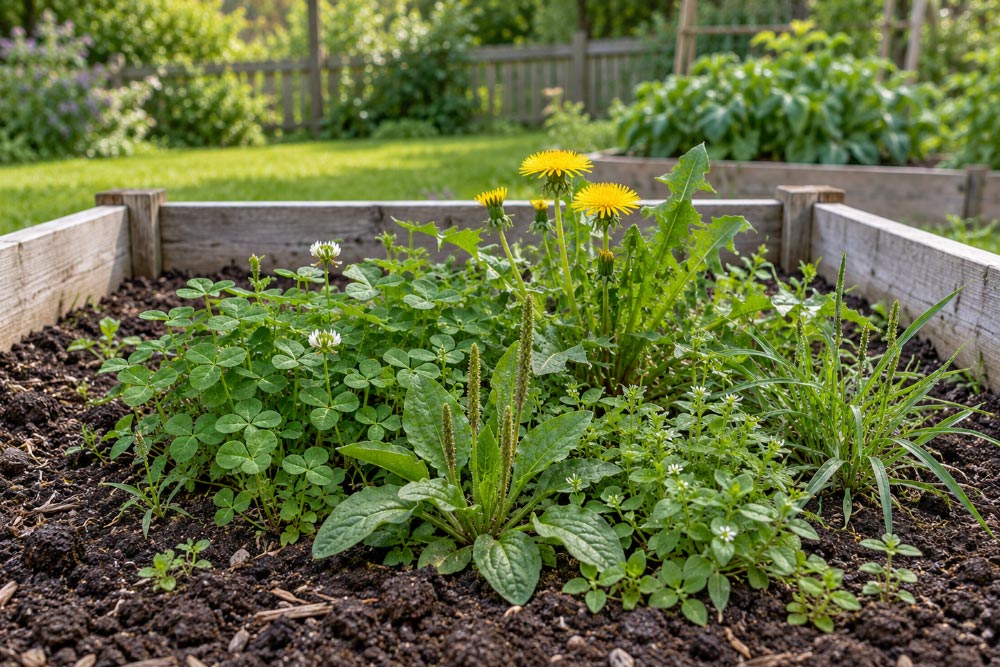
Dandelions, clover, plantain, and other common weeds growing in a raised garden bed.

What each weed points to

Common weeds and the soil conditions they often signal.

  • Dandelions, stinging nettle, or burdock

    May point to low calcium and compacted soil

  • Crabgrass, plantain, moss, or sheep sorrel

    Often signal low nitrogen or depleted soil

  • Lambsquarters, wild buckwheat, or knapweed

    Can indicate low phosphorus and higher potassium

  • Prostrate knotweed, bindweed, or curly dock

    Common signs of compacted, heavy, or poorly drained soil

Quick Soil Clues

Different weeds thrive in different conditions. Use them as clues before adding fertilizer, lime, or soil amendments.

  • Compacted or clay-heavy soil

    Dandelions, plantain, and bindweed

  • Poor drainage

    Field horsetail and dock

  • Low fertility

    Crabgrass, yarrow, and sheep sorrel

  • High nitrogen or rich soil

    Chickweed, henbit, and pigweed

  • Acidic soil

    Sheep sorrel and moss

Weeds Can Help, Too

Although weeds compete with lawn and garden plants, they can also improve soil over time.

  • Loosen the soil

    Deep roots loosen compacted soil.

  • Lift minerals

    Roots pull minerals upward from deeper layers.

  • Feed the soil

    Decomposing weeds add organic matter back into the soil.

Before you pull every weed, read the signs. Your soil may be asking for help.